
CS 101: Why do Community Solar programs exist?
Overview: Community solar makes clean energy more accessible by allowing businesses and households that may not be suited for onsite solar to still generate savings from renewable energy. At the same time, these programs help states and utilities meet renewable energy goals while also supporting local economic development.
At first glance, community solar’s promise of guaranteed savings with no upfront cost might seem “too good to be true”. But there’s more to the story. These programs create shared value, not just for businesses, but also for electric utilities, solar project owners, and the wider community. This Deep Dive unpacks how everyone can benefit from a community solar program.
The role of state-specific renewable goals
Community solar programs are created by specific legislation at the state level, meaning they aren’t available everywhere. Many states that adopt community solar programs also have laws requiring that a certain percentage of electricity come from renewable sources. These laws are often referred to as Renewable Portfolio Standards or Clean Energy Standards. Utilities in these states must incorporate increasing amounts of renewable energy into the grid over time. See Figure 1 below for a map of which states currently have stated goals that are either required, voluntary, or expired. It’s these markets that are more likely to pursue community solar programs as a way to facilitate more renewable energy on the grid and help the state meet its goals.
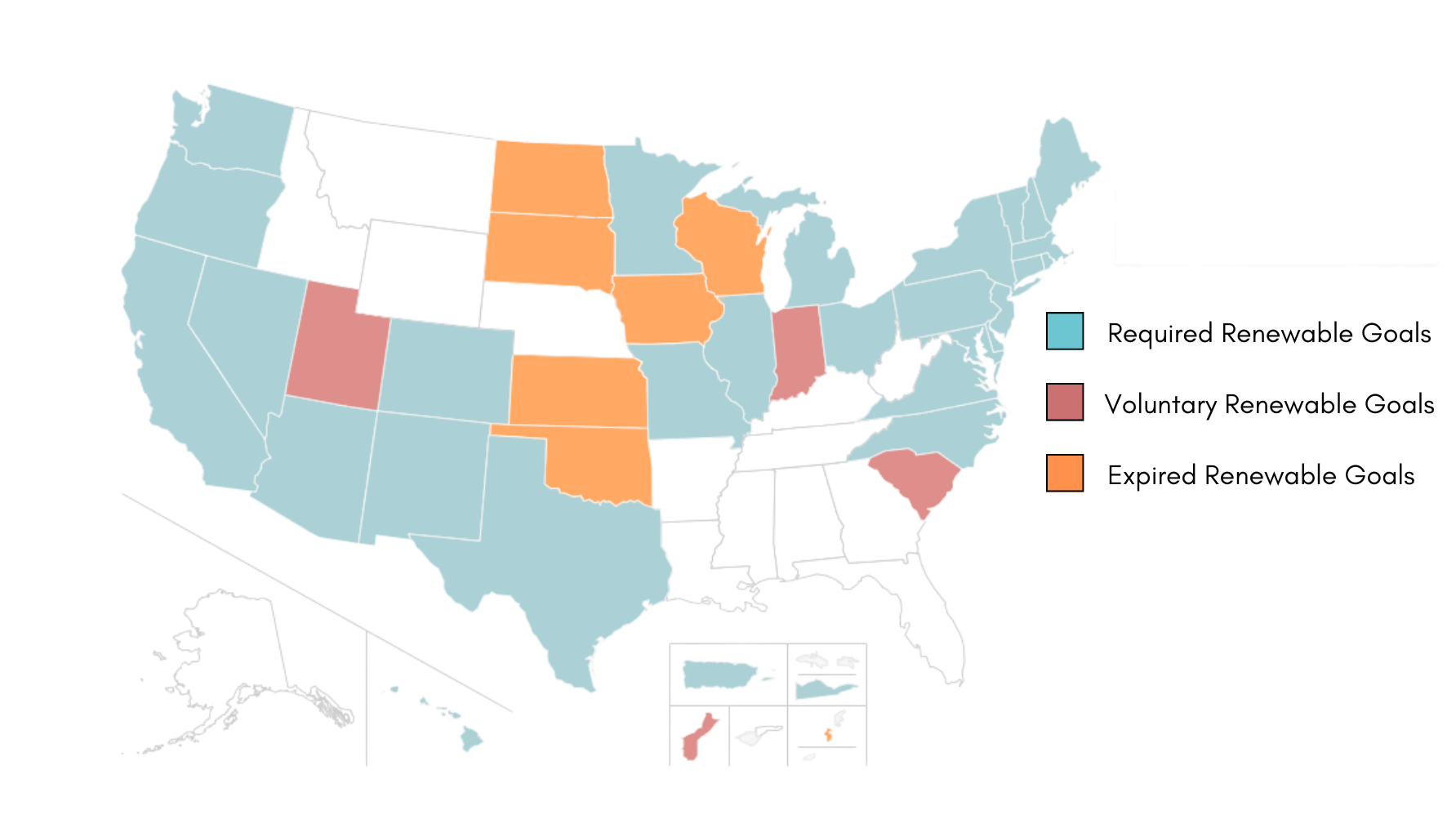
Figure 1: A map of the United States showing different levels of renewable commitment at the state level, 2025
“No roof space? No Problem”
Lots of homeowners, businesses, and non-profits want to tap into the savings from solar but often aren’t able to because of the upfront costs or limitations at their facility. Community solar programs help fill this gap, giving more electricity users a chance to access the benefits of renewable energy. Some state programs are even structured to direct part of the savings to low and moderate-income households, helping reduce electric bills for those who need it most.
It’s important to note that your business does not need to prove it can’t install onsite solar to join a community solar program. You can simply choose to participate, regardless of whether other options are available.
Why would a solar farm “give away money”?
Finally, let’s look at the solar project owners. They build community solar projects not just to be helpful: they are investing in the projects and hoping to make a return over time. However, every time they build a project, they need someone to buy the electricity. Community solar programs allow project owners to sell bill credits to businesses and homeowners, and bill project them for those credits at a 10-15% discount.
You might ask, “Why not just sell all the electricity to the utility and keep all the money?” Community solar programs are designed to be mutually beneficial for everyone. The project owners are able to sell electricity at a higher rate, while project subscribers receive discounts on their energy bills.
Painting the full picture
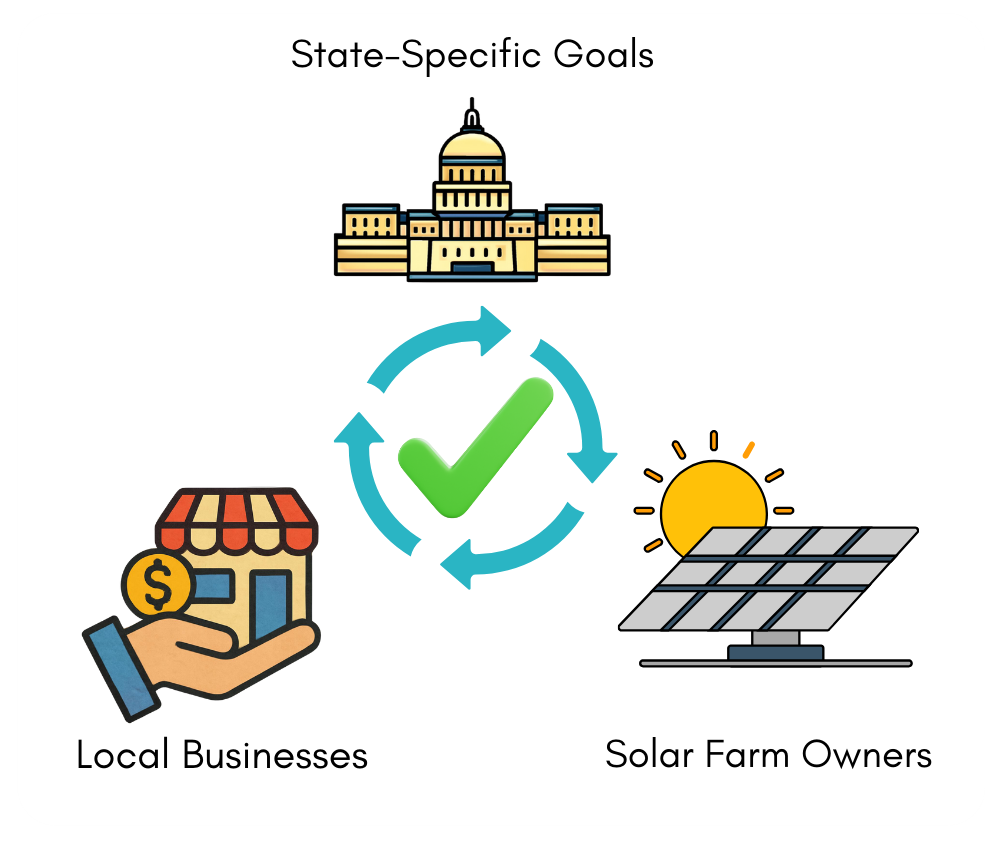
We can now see community solar programs aren’t designed just to provide savings for businesses.
Instead, they are part of a larger relationship that helps states reach their clean energy goals, supports local economic development, and directs benefits to people who might not otherwise have access to solar. Good community solar programs ensure that everyone benefits!
We believe energy savings should be simple
Turquoise Trail Energy Solutions was established to help businesses address rising energy costs and make confident choices on their energy strategy with clarity, transparency, and ease. Learn more, continue with our 5-part Community Solar 101 Series, where you’ll also learn:
Whether you have questions related to community solar, your electric bill, or your savings options in general, we’re here to guide you towards a smarter solution. Reach out to speak with an expert who can help you choose the right path.
